From Compliance to Culture – Transforming Workplace Safety
Posted on
Culture drives outcomes; compliance just keeps things in check.
Last month, we demonstrated how industry leaders transform safety from a compliance issue into a leadership priority that drives success across the business. Now we address the ultimate determinant of safety excellence: organizational culture.
The painful reality that separates the frontrunners from the also-rans in any sector is this:
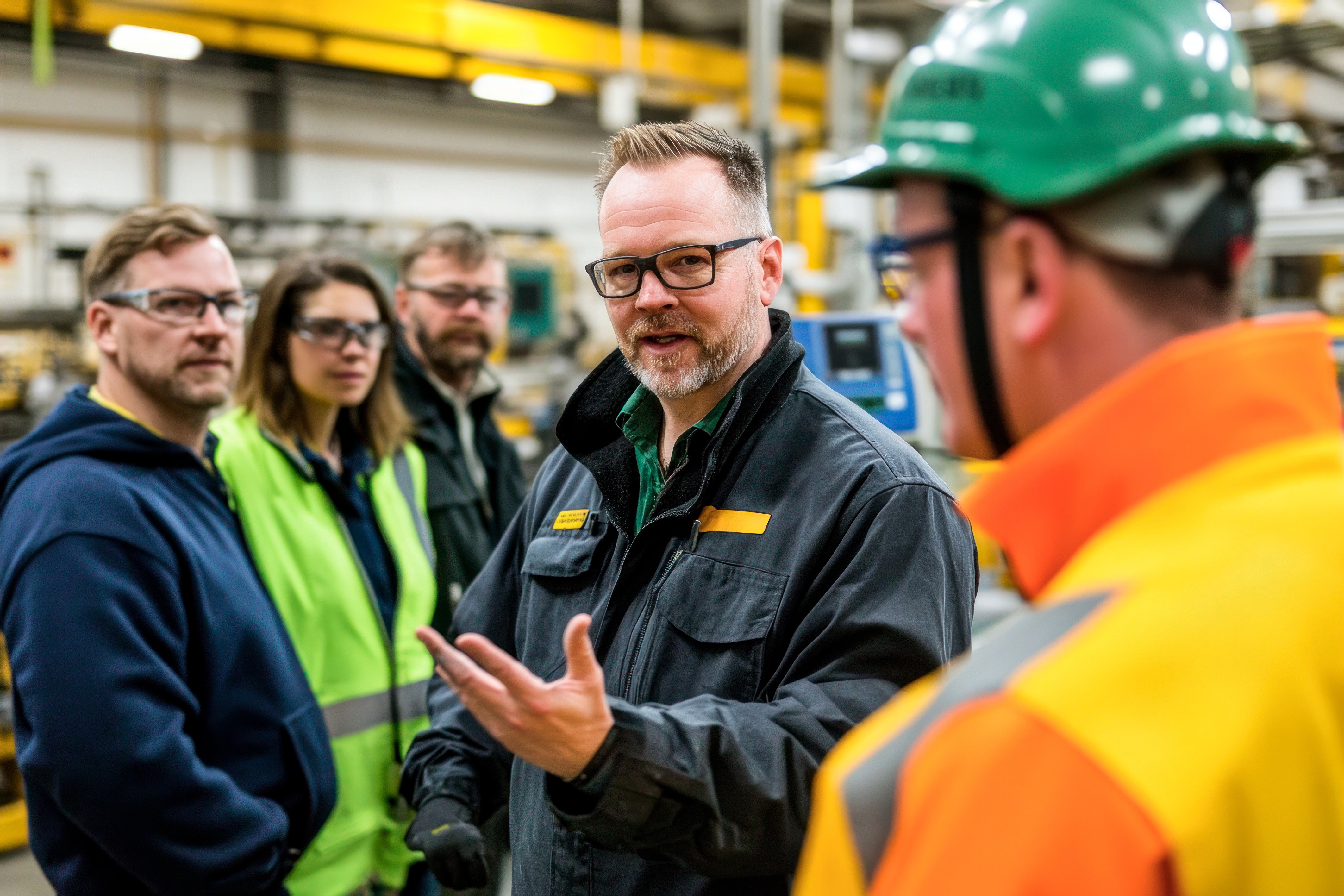
Unlike organizations that mainly focus on enforcing safety standards, outstanding organizations build environments where safety is a natural, automatic, and unwavering part of their culture.
Companies that consistently excel in safety recognize that culture isn't just a buzzword. It's the unseen driver that dictates whether employees actively try to prevent problems or scramble to react when things go wrong.
This month, we're pulling back the curtain on the exact methods top companies do to reshape their organizational DNA. They're building safety cultures so robust that achieving greatness is a given, not a stroke of luck.
The main question we are exploring is how businesses change from safety management that relies on rules to safety excellence that is driven by culture and can function without constant oversight.
1. The Invisible Architecture: How Culture Shapes The Destiny Of Safety
Those organizations that truly grasp this concept can then anticipate, manage, and refine safety results in every aspect of their operations.
Cultural factors significantly influence safety performance.
Research from the Harvard School of Public Health shows that organizational culture is responsible for 78% of the differences in workplace safety performance. This influence is significantly greater than the combined effects of technology, training, and following regulations.
Cultural DNA Components: Shared beliefs are the core principles that an organization holds, especially when faced with challenges. Behavioral norms are the expected ways people act when they think they aren't being watched. Decision-making patterns are the standards utilized when safety clashes with other important goals. Communication Flows: How safety information circulates inside an organization in distinct ways.
A steel manufacturing company successfully transformed its workplace culture, which led to a significant reduction in workplace injuries, ultimately achieving a record of zero fatalities.
The steel manufacturer found itself in a bind, with its operational license hanging in the balance. In a span of a year and a half, the corporation faced 23 significant injuries, four deaths, and regulatory penalties. These penalties, along with production setbacks, totaled $47 million in fines and lost output.
Repeatedly, traditional safety measures have shown their limitations. Even with comprehensive training initiatives, revised protocols, and stricter enforcement measures in place, the frequency of incidents persisted in its upward trend. The core issue, as leadership saw it, wasn't a matter of process, but of culture.
The Cultural Transformation Strategy:
A thorough cultural assessment was undertaken, employing established psychological tools.
The main cultural hurdles were clear: the relentless push to produce, a top-down approach to communication, tendency to point fingers when things went wrong.
A structured program was put in place, designed to alter the way people made decisions. Peer-to-peer safety accountability systems have been established, removing the need for top-down enforcement. Demonstrated apparent leadership commitment by implementing daily safety engagement measures.
Transformative outcomes in just two years
Zero fatalities in any operational setting.
The rate of serious injuries saw an 89% decrease.
The reporting of near-misses saw a 340% surge, suggesting a more proactive approach to spotting potential risks.
Employee safety engagement levels saw a significant increase, climbing from 2.3 to 8.7 on a 10-point scale.
Production efficiency saw a 17% boost, thanks to fewer interruptions.
The annual insurance premiums saw a reduction of $12 million.
The Culture-Performance Connection Matrix
Signs of a Strong Safety Culture:
Workers can halt operations if they believe there's a safety issue, and they won't be punished for doing so.
Safety is a topic that always comes up in every operating meeting.
The incidence of near-miss reports is significantly higher than the rate of actual incidents, with a ratio of 100 to 1.
Leadership credibility maintains strong, even when the heat is on during production.
Cross-functional collaboration tends to increase during safety programs.
Signs of a Weak Safety Culture:
Safety meetings prioritize adherence to regulatory compliance over actual improvement.
Investigations of incidents often focus on assigning blame, rather on finding solutions that address the underlying system.
Safety protocols are frequently sidelined in favor of meeting operational goals.
Safety suggestions from employees often go unacknowledged.
When things get busy, managers tend to be less involved in safety programs.

2. The Psychology of Resistance: Overcoming Obstacles to Change
Resistance to change isn't a personal failing; instead, it's a predicted psychological reaction. This response can be methodically overcome using proven methods.
Organizations that understand change psychology can speed up cultural transition while reducing disruption.
The Neuroscience of Safety Behavior Change
Research from the Center for Creative Leadership reveals that successful safety culture transformation follows specific neurological pathways. The human brain processes safety information through three distinct systems:
System 1 – Automatic Response: Unconscious, habit-driven safety behaviors
System 2 – Deliberate Analysis: Conscious risk assessment and decision-making
System 3 – Social Influence: Group-based safety norms and peer pressure
Case Study: Chemical Processing Facility Overcomes 15-Year Safety Plateau
A chemical processing facility recently overcame a fifteen-year period of stagnant safety performance. Even though the manufacturing facility had a good safety record for 15 years, it still couldn't reach the highest safety standards. Despite several attempts to improve, the rate of lost-time incidents remained at the same level as the industry average.
The analysis found that the workforce had developed unconscious resistance to safety measures. This was owing to past program failures and a lack of consistent leadership support.
The strategy for overcoming resistance:
A psychological safety evaluation was performed to pinpoint the precise sources of resistance.
Small-group sessions, spearheaded by well-regarded peer influencers, were put into practice to encourage behavioral shifts.
Implemented immediate safety enhancements to gain traction and establish trust.
Developed storytelling initiatives that encouraged employees to recount their own safety-related experiences.
Prioritized safety participation based on individual choice, rather than enforcing forced compliance programs.
Breakthrough Results in 18 months:
The rate of lost-time incidents saw a 71% decline.
The percentage of employees involved in safety programs saw a significant jump, climbing from 34% to 91%.
The implementation rate for safety suggestions saw a significant jump, climbing from 12% to 76%.
All shifts embraced the new safety programs, with little pushback.
The facility's safety performance was at the top in the industry.
3. Exercise: Resistance Pattern Analysis
Resistance pattern analysis is a method used to understand how people resist something.
This method helps identify the different ways people resist, which can be helpful for figuring out how to deal with it. By looking at the many types of resistance, we can find patterns that help us understand the reasons behind the resistance. This understanding can then be used to create better strategies for dealing with it.
Evaluate your organization's change resistance by answering with; yes or no, using the following diagnostic framework:
Cognitive Resistance Assessment:
Do workers think safety programs will genuinely make their jobs better?
Have past safety programs actually delivered the benefits they promised?
Do employees grasp the personal benefits of suggested safety changes?
Emotional Resistance Assessment:
Do employees genuinely believe that their executives prioritize safety above everything else?
Have previous safety attempts led to criticism or punishment?
Are employees feeling that their contributions are acknowledged and appreciated when safety information is shared?
Behavioral Resistance Assessment:
The effectiveness and practicality of safety protocols in actual work settings is a topic of considerable importance.
Do safety improvements make regular work more complicated or less so?
Can employees have a say in how safety programs are designed and put into action?
Is positive safety behavior recognized and reinforced?
Organizations that score below 7 out of 10 in any area face major obstacles to cultural change, requiring specialized actions to ensure success.
Academic Foundation: The Science of Organizational Change
The study of organizational change is a fundamental area of academic research. Research published in the Journal of Applied Psychology shows that changes in safety culture follow a predictable pattern, requiring specific leadership actions.
Stage 1 – Unfreezing: Cultivating a sense of unease about existing safety practices.
Stage 2 – Movement: Putting new behaviors and belief systems into action.
Stage 3 – Refreezing: Cementing these changes inside the organization's processes and structures.
Organizations that cut corners or hurry through the process often find themselves backsliding into old safety culture habits within a year or a year and a half.
The study, "Organizational Culture Change in High-Risk Industries: A Longitudinal Study of Safety Transformation," published in the Journal of Applied Psychology, examines how safety practices change in organizations that face significant risks. 109, 2024.
4. The impact of acknowledgment: Fostering intrinsic motivation for safety
People's actions are more strongly influenced by recognition and rewards than by regulations and enforcement. Organizations that truly excel in positive reinforcement cultivate a culture of safety that thrives on its own, requiring little to no outside oversight.
The Behavioral Science of Safety Motivation
Research from Stanford University shows that people are 67% more likely to maintain safe behaviors when they are motivated by internal factors, rather than by external rules. The trick lies in creating recognition systems that appeal to basic human psychological needs:
Autonomy: The feeling of choice and control in safety decisions.
Mastery: The sense of competence and skill development in safety practices.
Purpose: The connection between individual safety actions and meaningful outcomes.
Case Study: A global logistics company improved its safety performance by strategically recognizing its employees
A worldwide logistics firm, employing 150,000 people in 45 nations, faced a persistent problem: uneven safety records. Although some facilities showed good results, others had high incident rates, even though they followed the same protocols and training.
The study showed that facilities with strong performance had informal recognition systems. These systems encouraged people to interact with safety measures because they wanted to. In contrast, facilities that struggled depended only on enforcing rules.
The Recognition Revolution Strategy:
Crafted a multi-tiered award scheme, specifically tailored to address various motivational drivers.
Peer-to-peer safety recognition was put in place, complementing management's existing acknowledgment.
Acknowledged contributions in a way that resonated with employees' personal values and aspirations.
Implemented systems for immediate acknowledgment, moving away from yearly award events.
The success of the recognition program was assessed by looking at changes in behavior.
Remarkable Transformation Results:
The overall incident rate saw a 64% reduction across all global operations.
The successful use of high-performing facility principles was copied in places that were failing.
Participation metrics showed a 156% increase in employee safety involvement.
The employee recognition program saw a remarkable 94% of staff members becoming involved.
Annual costs per incidence fell by $2.3 million, thanks to a shift toward preventive.
The Recognition Architecture Framework
Immediate Recognition (Daily):
Recognizing safe decisions and pinpointing potential hazards.
Recognizing and valuing safety support and guidance from colleagues.
Social media highlights safety technologies and improvements.
Monthly Milestone Recognition:
Celebrating safety milestones with family and team members.
Professional development opportunities related to safety leadership.
Safety champions are now entrusted with greater responsibility and the power to make decisions.
Legacy Recognition (Quarterly/Annual):
Speaking engagements at industry conferences and forums for sharing insights.
Career advancement is directly linked to achieving high safety standards.
Community impact programs are sponsored by the accomplishments in safety performance.
Implementation Blueprint: Recognition System Design
Phase 1 – Assessment (Month 1):
Conduct a personnel survey to pinpoint the most favored forms of recognition and the preferred ways to distribute them.Examine the existing patterns of recognition and assess their efficacy.
Compare your recognition strategies with those of top companies in the field.
Phase 2 – Design (Month 2):
Develop a recognition program that spans several channels, tailored to various personality types.
Establish standards for acknowledgment that actively promote the cultural values you want to see.
To gauge the success of the recognition campaign, it's essential to set up measurement systems.
Phase 3 – Pilot Implementation (Months 3-4):
Initiate a recognition campaign in key areas of influence.
Solicit input and improve how recognition is given.
Equip managers and peer influencers with skills in successful recognition.
Phase 4 – Full Deployment (Months 5-6):
Implement a recognition program throughout the company.
Cultivate ongoing feedback mechanisms for progress.
Incorporate recognition measures into assessments of leadership performance.
5. HSEQ Market Intelligence – November 2025
Cultural Transformation Investment Trends:
On average, Fortune 500 businesses dedicate almost 23% of their safety spending to efforts aimed at transforming workplace culture.
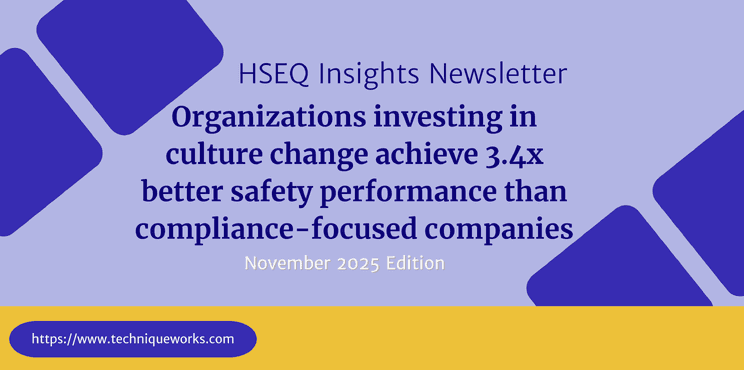
Organizations that invest in systematic cultural transformation show a 3.4 times better performance in health, safety, environment, and quality (HSEQ) measures, as well as in sustainability.
Within three years, the average return on investment for cultural transformation programs is 340%.
Technology Integration in Culture Change:
A significant 67% of industry leaders utilize behavioral analytics to assess success in cultural transformation.
Mobile recognition platforms have been shown to enhance involvement rates by 78% compared to traditional methods.
Using AI-driven technologies for cultural evaluation can cut the time it takes to transform an organization by about 40%.
Regulatory and Stakeholder Pressure:
Insurance providers often offer a 15% discount on premiums for businesses that can prove they prioritize safety.
Investors are increasingly using the maturity of safety culture as a key indication of Environmental, Social, and Governance (ESG) performance.
Supply chain partners now mandate cultural evaluation documents before any deal is finalized.
Competitive Landscape Analysis:
The competitive landscape is a complex web. Understanding it requires more than just a cursory glance. It's about knowing who the players are, what they're doing, and how they're doing it.
First, let's look at the key competitors. Who are they? What are their strengths and weaknesses? This is the foundation of any competitive analysis.
Next, we need to consider their strategies. How are they positioning themselves in the market? What tactics are they using to get an edge? This is where the real insights come from.
Finally, we must assess the overall market environment. What are the trends? What external factors are influencing the competition? This broader perspective is essential for a complete understanding.
Companies that prioritize safety see a 41% boost in how long their employees stick around.
Safety programs that prioritize culture can save companies an average of $2.7 million per year in recruitment expenses.
Companies with top-tier safety cultures see a 28% boost in consumer satisfaction.
Strategic Recommendations for Culture Masters
To cultivate a thriving cultural environment, consider these key strategies.
Immediate Action Items (Next 30 Days):
Employ established measurement tools to perform a thorough cultural assessment.
Find and connect with informal culture influencers, no matter where they sit in the company hierarchy.
Establish a daily leadership visibility program that clearly shows a genuine commitment to safety.
Quarterly Transformation Initiatives:
Implement a peer-to-peer recognition scheme, with mechanisms to track behaviors.
Form a cross-functional culture reform team, backed by executive support.
Implement a communication strategy across multiple channels to strengthen the ideals of our safety culture.
Annual Culture Excellence Goals:
Attain a safety culture maturity level that places us in the top 25% of our industry.
Make cultural transformation a fundamental strength to get a competitive edge.
Cultivate a position of industry leadership by fostering cultural innovation and sharing best practices.
Professional Development Priorities:
The HSEQ leadership team should get change management certification.
Cultivate in-house proficiency in cultural change initiatives, hence lessening the need for outside consulting services.
Develop the tools and methods to assess and analyze culture, fostering ongoing enhancement.
Knowledge Validation: Culture Transformation Mastery Check
1. Harvard research indicates that organizational culture accounts for a significant portion of the differences seen in safety performance, is this correct?
Organizational culture is responsible for 78% of the differences seen in workplace safety performance. This is a much larger impact than technology, training, or following regulations.
2. What are the three neurological systems that process safety information and behavior change?
System 1 (Automatic Response for unconscious habits), System 2 (Deliberate Analysis for conscious decisions), and System 3 (Social Influence for group-based norms and peer pressure).
3. What three fundamental psychological needs must recognition systems address to create intrinsic safety motivation?
Autonomy (feeling of choice and control), Mastery (sense of competence and skill development), and Purpose (connection between individual actions and meaningful outcomes).
4. What is the primary difference between recognition that works and recognition that fails?
Effective recognition reinforces the identity people want to have rather than just the behaviors organizations want to see, creating sustainable motivation rather than temporary compliance.
Minimize image
Edit image
Delete image

Next month, we will expose the methodologies that industry leaders use to transform quality from reactive problem-solving to predictive excellence that prevents defects, eliminates waste, and optimizes every operational process.
Get our free guide, "The Safety Leadership Excellence Framework – Assessment Tools and Development Strategies for Commanding Safety Performance."
This is the missing piece every HSEQ program needs.
REPOST to complete the puzzle for your network. FOLLOW Amador Brinkman and Technique Works for strategic insights that turn good safety programs into unstoppable competitive advantages.
Thanks for reading.
Next month's subject: Quality Assurance – Beyond Compliance to Excellence.
Newsletter
Safety culture
HSEQ training
Workplace safety
Continuous improvement
Human factors in safety
Safety culture assessment
Employee engagement in safety
Safety communication
Safety coaching